Showing posts with label TECH. Show all posts

You may remember the “minor” security update for the HTC EVO 3D that Sprint rolled out a few days ago, but I bet you didn’t know it had a hidden surprise (don’t worry it’s a good surprise). It appears Sprint was kind enough to remove Carrier IQ from the HTC EVO 3D as slyly as they implemented it. This is great news for EVO 3D users looking to get that monkey off their back.

BRADENTON/NEW YORK: Google Inc hit the U.S. bond market on Monday with its high grade market debut, announcing a $3 billion sale of 3-year, 5-year and 10-year notes that will take advantage of low borrowing rates.

Proceeds of the SEC-registered deal will be used to repay commercial paper and for general corporate purposes, the company said in a statement. Citigroup , Goldman Sachs and JP Morgan are joint lead managers on the deal, which garnered an Aa2 rating from Moody's Investors Service, the third-highest rating in the agency's scale.

Apple, Android phones face tighter laws in Europe: Report

LONDON: Smartphones of Apple and Google are likely to face tighter regulation in Europe after a data protection panel ruled that location information collected by the devices should be classified as personal data, says a media report.

"Apple smartphones and those running on Google's Android system look set to come under tighter regulation in Europe, after an EU data protection advisory panel ruled on Wednesday that location information collected by the devices should be classed as personal data," the Financial Times reported.

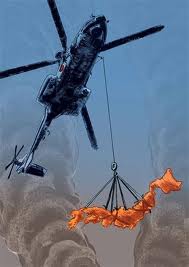
Japan disaster sparks social media innovation

Once the magnitude of the March 11 disaster became clear, the online world began asking, “How can we help?”
And for that, social media offered the ideal platform for good ideas to spread quickly, supplementing efforts launched by giants like Google and Facebook.
A British teacher living in Abiko city, just east of Tokyo, is leading a volunteer team of bloggers, writers and editors producing “Quakebook,” a collection of reflections, essays and images of the earthquake that will be sold in the coming days as a digital publication. Proceeds from the project will go to the Japanese Red Cross, said the 40-year-old, who goes by the pseudonym “Our Man in Abiko.”
The entirely Twitter-sourced project started with a single tweet exactly a week after the earthquake. Within an hour, he had received two submissions, which soon grew to the 87 that now comprise the book.
Quakebook involves some 200 people in Japan and abroad, and the group is in negotiations to sell the download on Amazon.com. It didn’t take long for others to notice. Twitter itself has sent out a tweet about Quakebook, as has Yoko Ono. Best-selling novelist Barry Eisler wrote the foreword for the book. Organizers, including Our Man in Abiko, will hold a press conference at the Foreign Correspondents’ Club of Japan in Tokyo on Friday.
“I just thought I want to do something,” he said in a telephone interview. “I felt completely helpless.”
Another project, “World’s 1000 Messages for Japan,” is an effort to convey thoughts from around the globe. Writers can leave short notes on Facebook or through e-mail, which a group of volunteers then translate into Japanese. The translations are then posted on Twitter as well as the group’s website.

Install Mozilla Firefox 4.0 in Ubuntu 10.10 / 10.04

Here is a simple and straight way to install Mozilla Firefox 4.0 in Ubuntu 10.10 Maverick or 10.04 Lucid. I hope you have checked out my previous post on Firefox overview. Now Ubuntu users can forget about updating their favourite browser with the new automatic update feature. Try it out right here to experience the new features.
click here

FACEBOOK=“social experiences”

Facebook Deals will be launching “in the coming weeks.” A few more details on how the program will work, and how it will be differentiated from daily-deal market leaders Groupon and LivingSocial, have been revealed courtesy of NetworkEffect:
All deals offered on the Facebook platform will be “social experiences,” said a spokeswoman–aka “things you can do with your friends.” That might include a discount for a karaoke bar or a tour of a haunted house, but not 50 percent off a t-shirt or a pedicure, she said. Facebook’s deals will be available for considerably more than a day, she added, without specifying a length. As for how users will pay for the deals, the spokeswoman said Facebook has not yet determined exactly how that will work, but it may include Facebook Credits.
Facebook Credits has so far been mainly used for virtual goods, and occasionally for digital goods. Facebook currently takes a significant cut (30 percent) for the virtual currency, though Groupon and LivingSocial both take roughly 50 percent of the revenue for a given deal.
Even if Facebook doesn’t end up using Credits for Deals, we can expect the social network to handle transactions directly through its website. The program will let users see discount offers from partner services, including ReachLocal, Gilt City, Tippr, HomeRun.com, PopSugar City, KGB Deals, Plum District, and Zozi.
Even if Facebook invited Groupon and LivingSocial to participate, both likely would have said no since they prefer to control their customers’ full transactions. Both market leaders have a policy of not sharing affiliate fees with distribution partners, while most of their smaller competitors often do share revenue in exchange for distribution.

What needs to happen before the iPhone gets NFC

We may not have jet packs yet, but pretty soon plastic will be a thing of the past. At least in our wallets, that is.
The technology that will bring us part of the way there is near-field communications (NFC), an exciting tool that lets devices exchange information with one another when in close proximity. So far, its main use has centered on payments, specifically point of sale terminals at retailers. In fact, you probably have a credit card from your bank with an NFC chip in it.
The next frontier for those little chips is in smartphones. Like wallets, these have become something people carry around with them everywhere they go. More importantly, mobile application stores have warmed users to the idea that the phone can have a direct line of credit with your bank account and some of the same cards you're carrying around.
For nearly a year now, a mix of patent filings and third-party reports have pointed at Apple adding NFC to its devices, specifically the iPhone. But none has managed to offer a clear, well-supported stance of what Apple is really up to. CNET talked to two NFC experts about the current mobile payments landscape, and they spelled out some of the hurdles Apple faces not only in putting NFC chips into devices but also in setting up the infrastructure and partnerships to make it a reality.
Before delving into the nitty-gritty though, it's worth understanding why would Apple would even venture into NFC in the first place. The simple answer is that it's an enormous business opportunity.
"Electronic payments in the U.S., according to the Federal Reserve was $40 trillion in 2010," David Eads, who is the founder and CEO of Mobile Strategy Partners told CNET. "So for every 1 percent of mobile payment adoption that happens of that number, that's $407 billion in transactions." 

PlayBook Coming April

Watch out Apple iPad 2, the Wi-Fi only BlackBerry PlayBook tablet is available now for preorder at Best Buy, Research In Motion announced Tuesday. The device will hit Best Buy stores April 19. The PlayBook comes in 16GB, 32GB and 64GB storage flavors priced at $500, $600 and $700, respectively. The new tablet device will also be coming soon to more than 20,000 retail outlets in the United States and Canada including Office Depot, RadioShack, and Staples. Carriers such as AT&T, Sprint, Verizon and regional carriers including Cellular South and Cincinnati Bell will also sell the device. It is not clear whether outlets beyond Best Buy will get the PlayBook on April 19.  
PlayBook Specs: Where's the 3G?

Apple slammed for approving "gay cure" app

Apple's in hot water after approving an iPhone app from a religious ministry which encourages people to "cure" themselves of homosexuality.
Exodus International put out its app last month targeting "homosexual strugglers." The app also connects users to the ministry's Web site and links out to related posts and news about its activities.
The organization advocates for "freedom from homosexuality through the power of Jesus."
A non-profit group called Truth Wins Out, has since organized an online petition to pressure Apple to remove the app. By mid-Monday morning, more than 100,000 people had signed their names to the petition.
Apple has not yet responded to the petition, which urges CEO Steve Jobs to reference the company's own software guidelines and remove the app. The terms state that "any app that is defamatory, offensive, mean-spirited, or likely to place the targeted individual or group in harms way will be rejected."

CTIA 2011: HTC Evo 3D takes phones into 3-D

(CBS) - Cell phones are joining movies, television and videogames in the third dimension. On the first day of CTIA 2011, Sprint unveiled the HTC Evo 3D, an android phone with a 3D camera.
With a 4.3-inch screen and the familiar candy bar/smart phone shape, the Evo 3D's big surprise doesn't reveal itself until you turn the phone over. On the back are two 5-megapixel cameras that can shoot photos and video in 3D.
Like the new Nintendo 3DS and the Optimus 3D - the first 3D cell phone - the Evo 3D does not require 3D glasses to be effective. Unlike movies, the images don't jump out at the viewer but rather float off the screen.
It's not quite Avatar, but according to CNET's Kent German the effect is "definitely noticeable and rather fun."
A simple switch toggles between 3D and 2D for those who prefer their images to stay in one plane.
As developers and manufacturers continue to foist 3D on consumers, it only makes sense that phones are joining the movement. AT&T plans to add a variation of the Optimus 3D to their line-up. No word on the price of either phone yet, but stay tuned to CNET's complete coverage of CTIA 2011 for more info.

A formidable contender for iPad

Believe it or not, the era of netbooks has passed. 2011 will be the year of tablets.
In the past, we already had slates — or tablets — from Acer, Fujitsu, Hewlett-Packard and many other leading computer makers. However all of them were still driven by Intel processors and ran on Microsoft Windows. Apple, the brand associated with innovative but pricey products, blew everyone away when it introduced the iPad, a slate that looks more like a large iPod or iPhone sans telephony.
Indeed, the iPad was one of Apple’s biggest successes. Less than two months after launching it, the company reportedly shipped two million units. In 2010, Apple sold 8 million iPads across the world.
With the phenomenal success of the iPad, it isn’t surprising computer makers rushed to come up with their own tablets. These include Research in Motion (the maker of BlackBerrys), Dell, Hewlett-Packard and, surprise surprise: Samsung.
The Korean electronics giant released its Galaxy Tab more or less at the same time Dell launched its Streak, which we also looked at last year.
www.samsung.comwww.samsung.com
The Galaxy Tab has a 7-inch TFT LCD with a 1024 x 600 resolution, compared to the Streak’s 5-inch TFT screen. More importantly however, the Tab is regarded by many as the strongest contender to the iPad to date. So many people were buying it that Samsung had already sold one million units in the first three months it was launched.

The latest Communicator from Nokia

Think of any technological innovation included in a smartphone: a mini-HDMI port, USB On-The-Go (OTG), an AMOLED screen, unibody design, etc… All of those features can be found in the latest model of Nokia Communicator, the E7.

The HDMI port and cable will stream different types of content to be displayed on an HDMI-capable LCD or LED TV. It is a great feature, as it is capable of handling different standards. If we need to make a video presentation, we will no longer need a notebook computer; we can stream it directly from our E7.

The USB OTG is perhaps the greatest innovation on the E7. It allows the E7 to function as a host and another device, such as a thumb drive, to work as an external hard disk. It even allows another cell phone to be used as a peripheral, or vice versa.

To give you an example, I was able to transfer files directly to and from a thumb drive using the supplied USB OTG cable. I was able to play a video file that was stored in it, too. With USB OTG, we no longer have to turn on our notebooks for tasks such as this one.

Like most other high-end smartphones, the E7’s screen is protected by Corning Gorilla Glass, which prevents scratches and cracks. On the E7, it is further complemented by Clear Black Display (CBD) technology, which makes blacks look really black and enhances contrasts. Colors are also presented vividly.

The unibody will remind us immediately of the MacBook Pro. The good thing is that it enables Nokia to create a sleek looking smartphone. But we cannot replace the battery ourselves. We will need to take it to Nokia Service Center to do so.

But will it be necessary? We have almost never heard people having to replace the battery inside their MacBook or iPod Touch or iPhone. Anyway, is it really likely that you will still be carrying around the same smartphone for more than three years?

The E7 is a Symbian smartphone. It runs on a specific version of the operating system called Symbian^3. The user interface has been tweaked and made friendlier for the user. And, like most other Nokia smartphones over the past few years, the E7 is closely tied to Ovi. Applications are downloadable from OVI. There are not as many applications in Ovi compared to the iPhone or for Android phones.

I don’t particularly mind this. What I need are a few applications that include some productivity tools, map updates, one or two dictionaries and perhaps a few games. These kinds of applications are available on Ovi. Some are available for free.

The E7 is the successor of the E9. Both belong to the business-oriented communicator line of smartphones. Courtesy of Nokia Indonesia, I had a hands-on experience with an E7. What else did I find?

First, the phone sensitivity is excellent. I was still able to maintain the call even as I walked to a location with a weak signal. The unibody was made of polished aluminium and felt very solid in my hand. The E7 comes in different colors — dark gray, green, orange and blue.

The voice quality was high due the noise cancellation feature.

Introducing Your Honey to Linux

"A couple years ago, I bought my wife a new Thinkpad," Slashdot blogger Chris Travers recalled. "She made a specific request: 'I don't want to use something weird, like Linux.'" Though the laptop came with Vista, it "never worked right. It had video card issues, power management issues and networking issues." After a few days, Travers' wife asked him to "'do anything you can to make this work or return it,'" he said. "So I installed Fedora Linux."
click here

A genius approach to web security

FORTUNE -- The prototypical computer security expert is some ponytailed guy with a three-day beard and an uncomfortable habit of telling hacker war stories that make you scared to go online for weeks. Then there's Dawn Song, a 36-year-old associate professor at the University of California at Berkeley and a MacArthur Foundation fellow (also known as a MacArthur genius). With her broad smile and laugh, Song puts a visitor at ease, then begins mapping the Internet out on a whiteboard. The whole genius thing quickly becomes apparent.
Song and her research team aren't looking to simply patch holes in the Internet that online baddies are constantly trying to penetrate. She takes a more holistic approach, designing technology tools that can act as building blocks for an overall secure computing experience -- on any device. The proliferation of smartphones and tablets means more people are trying to share sensitive information via the public Internet instead of private networks, a practice that makes Song shudder. "If I have uploaded my data naively into the cloud, the best I can do now is cross my fingers and hope that whoever is storing my data is doing a good job with their security," she says. 
By studying the underlying patterns of how software, hardware, and networks interact, Song has become expert at understanding the flow of both "good" data and ill-intentioned hacks. Song's groundbreaking research has become the basis for two important platforms: BitBlaze, which analyzes malicious software code, and WebBlaze, which focuses on defending web-based applications and services against it. (The WebBlaze approach has been used in the design of mainstream web browsers.) Song is also working on the privacy side of things, so that people can trace where their sensitive data have been and know that it is either secure or has been sold or breached.
Song's hope is that BitBlaze, WebBlaze, and her privacy initiatives become fundamental Internet tools that are deployed when any person or company builds a new cloud-based service or overhauls an existing one. Her team is working on commercial versions of the security platforms that would offer custom analysis to paying customers.

Twitter turns 5, goes from 0 to 140 million tweets a day

NEW YORK (CNNMoney) -- Five years ago today, Twitter cofounder Jack Dorsey blasted off the very first tweet. What began as an experiment in "microblogging" -- no more than 140 characters, please -- has become a cultural landmark.
Twitter now has 200 million users, including tech luminaries, celebrities and the president of the United States. It started off slowly: In 2007, Twitter averaged just 5,000 tweets per day. But in 2009, the site hit a tipping point and became a broadcast channel for major news events.
The now-iconic photo of passengers lined up on the wings of the plane Capt. Chesley "Sully" Sullenberger landed in the Hudson River went out to the world on Twitter (from @jkrums: "There's a plane in the Hudson. I'm on the ferry going to pick up the people. Crazy."). Six months later, during Michael Jackson's funeral, users blasted off 456 tweets per second -- a site record at the time. Now, those numbers look quaint: Twitter currently fields 140 million tweets in a typical day, or more than 1,600 every second.
The site's most dramatic moments have come during political uprisings. In Moldova, Iran, Tunisia and Egypt, protestors turned the site into a communications hub, using it to coordinate plans and broadcast their message. The U.S. State Department spotlighted Twitter's growing role in global statecraft when, during the Iranian election protests, it asked the company to delay planned maintenance and keep its network running.
"I've had a career-long interest in this democratization of information, getting people to express themselves, especially places where they wouldn't have a voice," co-founder Biz Stone told CNNMoney in an interview last year.
Exponential expansion comes with growing pains. Twitter's "Fail Whale" mascot became famous thanks to frequent appearances as the site's infrastructure struggled to keep up with usage spikes.
The company has been through two management shakeups. The first, in 2008, had co-founder Evan Williams take over from Dorsey as CEO; the second, five months ago, moved then-COO Dick Costolo into the top spot.
He's got a daunting challenge: Turn Twitter into a business. The site now has 400 employees and raised an eye-popping $360 million from investors, but has generated scant revenue.
If it wants to survive another five years, it needs to turn tweets into profits. Search engines like Google and Microsoft's Bing pay Twitter for access to its "firehose" of real-time tweet data; advertising is another revenue stream. Costolo's job is to find enough moneymakers to justify Twitter's $4 billion valuation.
Twitter's earliest pioneers have moved on. Jack Dorsey is now working on building a mobile payment platform at his new company, Square. After helming a big redesign last summer, Evan Williams is taking an extended break from day-to-day Twitter involvement.
But Dorsey says that whatever happens next for Twitter, it's already established a legacy and changed how we communicate online.
"The big thing I learned from Twitter are these concepts of immediacy, transparency, and approachability," Dorsey says. "I think Twitter's done a very good job for the communications industry."